The 'Health Optimization' trend is here
September 17, 2026 • 6 MIN READ
"Health optimization" used to sound like something only Silicon Valley biohackers cared about, such as cold plunges, continuous glucose monitors, supplement stacks. Not anymore. The global biohacking and longevity market was valued at roughly $45 billion in 2025 and is projected to more than triple to $134.75 billion by 2030, driven largely by ordinary consumers wanting more control over their own health data, not just elite athletes or tech founders.
But you don't need a smart ring or a $2,000 full-body scan to optimize your health. For most Filipinos, the highest-leverage version of this trend is much simpler and far more accessible: knowing which screenings you actually need, and getting them done on schedule, at every decade of your life.
Why Preventive Screening matters more in the Philippines specifically
The numbers make the case better than any wellness trend does. According to the Philippine Statistics Authority, ischaemic heart disease was the leading cause of death nationwide in 2025, responsible for 122,339 deaths — 19.7% of all deaths recorded that year. Cancer (neoplasms) ranked second with 70,668 deaths (11.4%), and cerebrovascular disease (stroke) ranked third with 60,947 deaths (9.8%). Diabetes mellitus rounded out the top five, at 37,978 deaths (6.1%).
What ties these together is that all four are largely preventable or catchable early through routine screening — and all four develop silently for years before symptoms appear. That silence is the real problem. The International Diabetes Federation estimates 2.8 million Filipinos are currently living with undiagnosed diabetes, on top of the 4.3 million already diagnosed. Separately, a nationally representative survey of older Filipinos found that even among those already diagnosed with hypertension or diabetes, 30.7% remain unmedicated, meaning diagnosis alone isn't enough without consistent follow-through.
In short: the diseases most likely to kill Filipinos are exactly the ones early screening is built to catch. That's the actual "optimization" opportunity is not a wearable, but a lab slip.
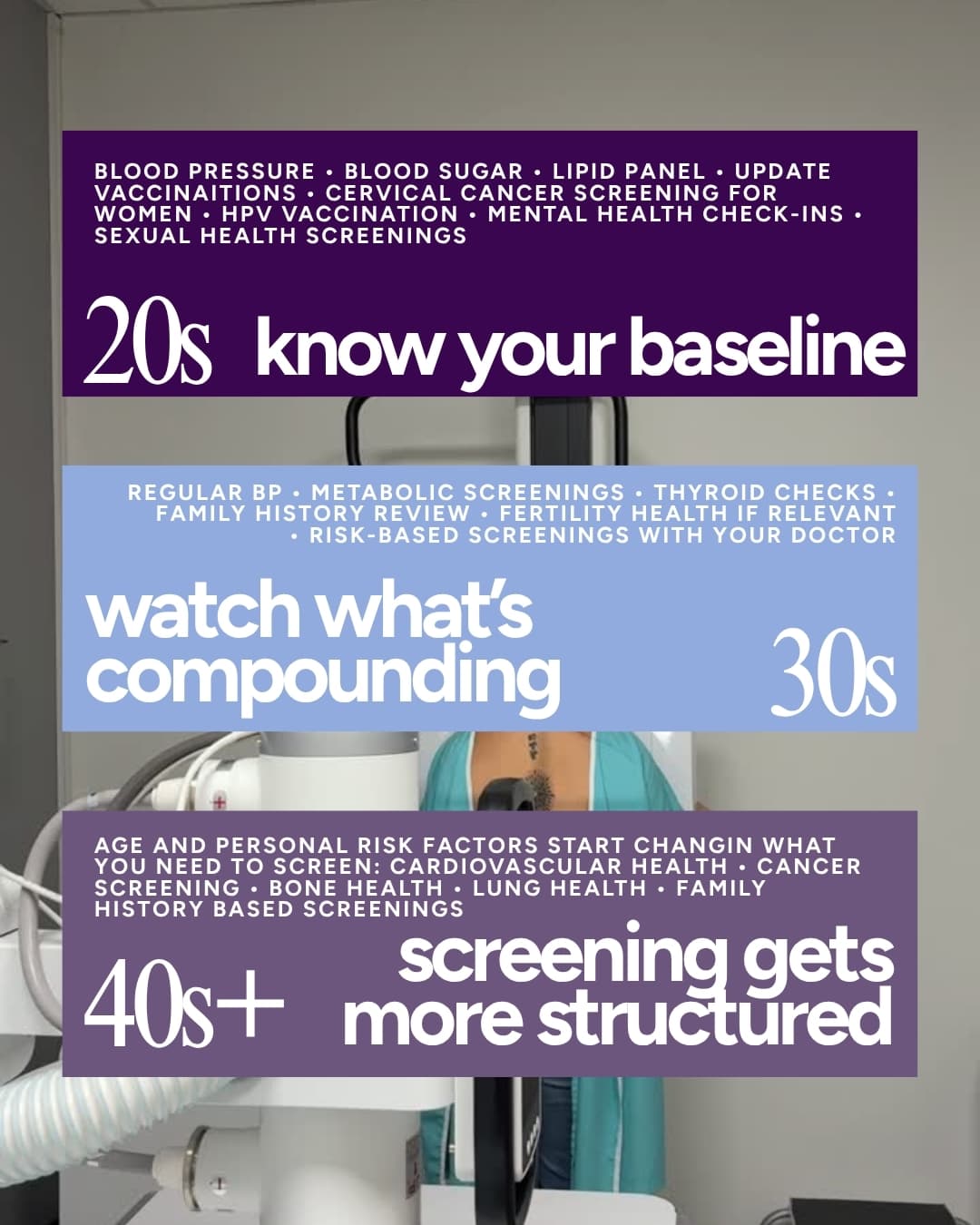
Your 20s: Build Your Baseline
Most people in their 20s feel invincible, superhumans, which is precisely why this is the most-skipped decade for checkups. But your 20s are when you should establish baseline numbers — reference points your doctor will compare everything against for the next 40 years.
What to get checked:
Blood pressure — a community-based Philippine study found undiagnosed hypertension in 14.83% of young adults, with the strongest links to ages 25–30, sedentary lifestyle, high salt intake, obesity, and smoking. This is not a "later" problem.
Fasting blood sugar and lipid panel — even without symptoms, this establishes your metabolic baseline
Cervical cancer screening (women) — Pap smear starting at age 25, per Philippine clinical guidelines; HPV vaccination is most effective when given before sexual activity begins, but still offers benefit up to age 45
HPV vaccination (all genders) — protects against strains linked to cervical, anal, and oropharyngeal cancers
Routine immunization review — many adults are overdue on boosters without realizing it
Mental health check-in — establishing a relationship with a provider now makes it easier to seek help later
Your 30s: Lifestyle risk starts compounding
This is the decade where career stress, sedentary jobs, and accumulating years of diet and lifestyle choices start showing up in lab results — even though you may still feel fine.
What to add:
Annual blood pressure and metabolic panel — don't wait for symptoms; hypertension prevalence nationally has climbed from 22% in 1993 to over 25% by 2013, and it keeps climbing with age
Thyroid function testing, especially for women, who face higher rates of thyroid disorders
Family history review with your doctor — if a parent or sibling has had heart disease, diabetes, or cancer before age 60, this changes your own screening timeline
Skin checks — sun exposure accumulation starts mattering more
Fertility-related screening, if relevant to your plans — earlier baseline data gives more options later
40s and Beyond: Expanded, Structured Screening
This is where Philippine clinical guidelines get specific with age-based recommendations, because risk for cancer and cardiovascular disease rises sharply.
What changes:
Cholesterol/lipid screening becomes a standing recommendation for all adults, with statin therapy considered for those aged 40–75 who have cardiovascular risk factors, per Philippine periodic health examination guidelines
Colorectal cancer screening typically begins in this decade, depending on family history
Mammogram screening (women) — timing depends on personal and family risk factors, discussed with your physician
Lung cancer screening via low-dose CT for current or former heavy smokers aged 50+
Abdominal aortic aneurysm screening — recommended specifically for men aged 60–80 under Philippine guidelines
Bone density screening — increasingly relevant, especially for women post-menopause
The real barrier isn’t awareness—it’s access
The uncomfortable truth in the hypertension and diabetes data isn't that Filipinos don't know these conditions exist. It's that even free public medication programs still leave roughly a third of diagnosed patients unmedicated, and millions more undiagnosed altogether. Cost, clinic access, and simple inconvenience are often bigger barriers than awareness.
This is exactly the gap that convenient, at-home or nearby screening services are built to close — removing the friction of a full-day hospital visit for a test that takes fifteen minutes.
The Full Body Check 50 by Hati Health
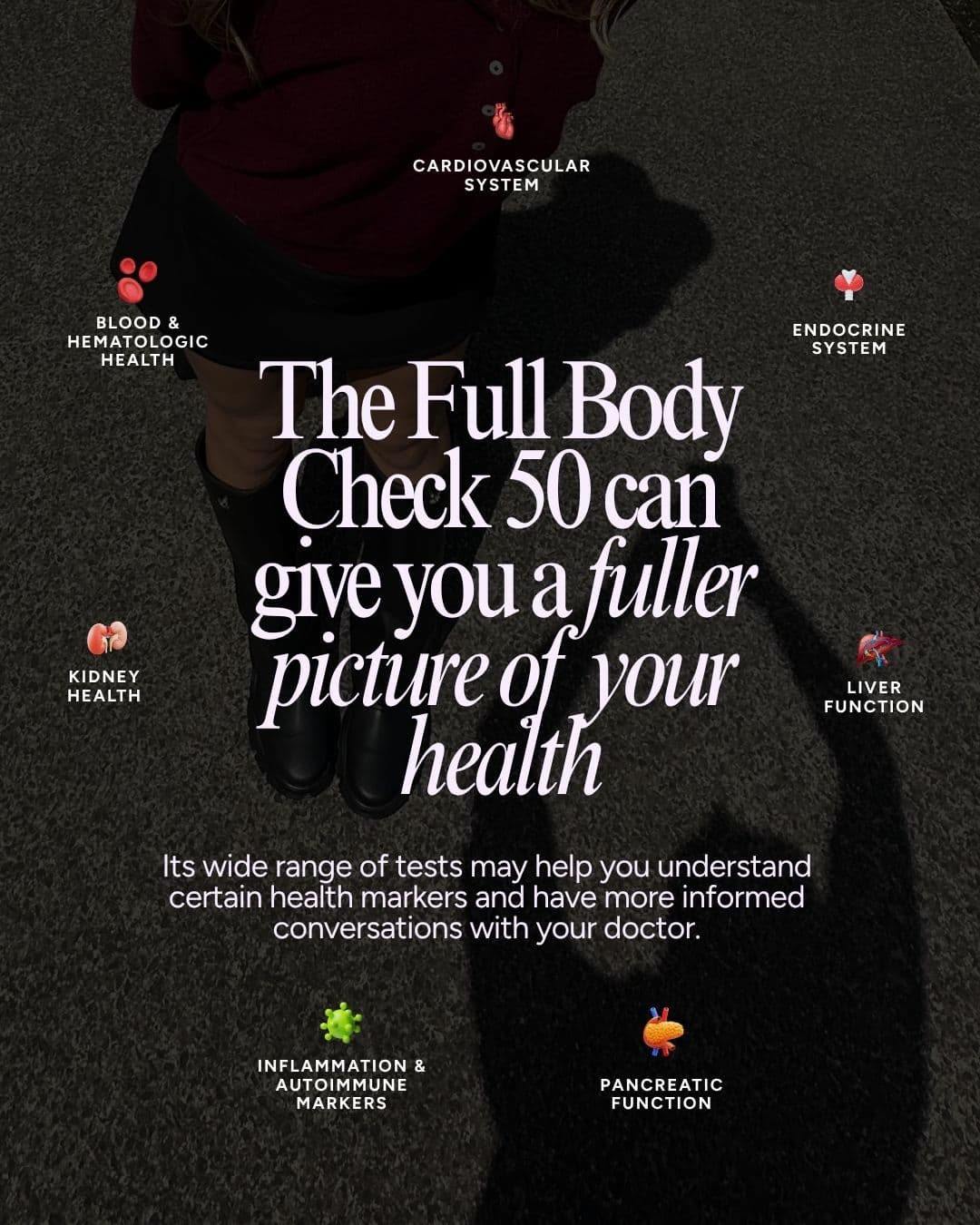
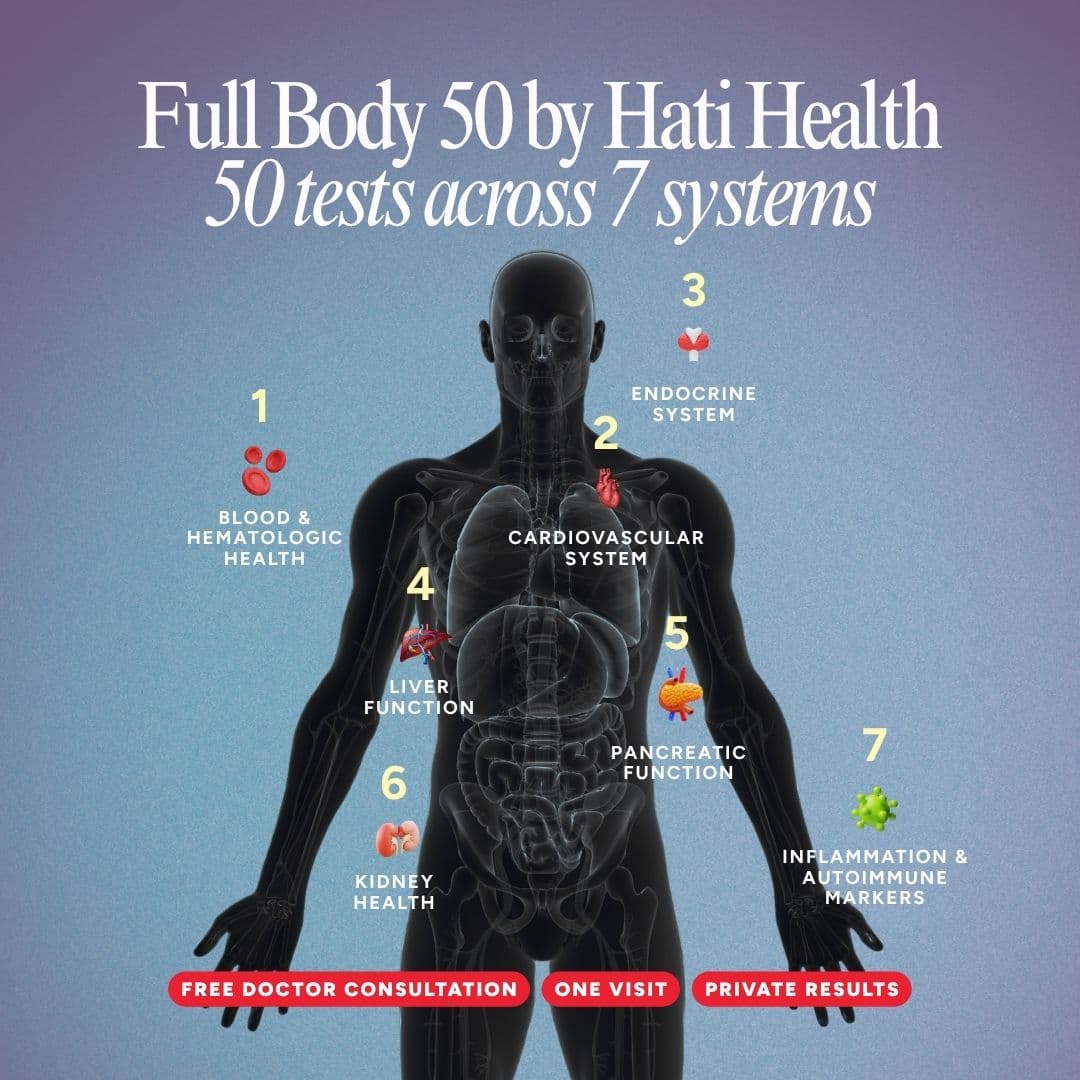
You don't need every test on this list at once, and you don't need to book a hospital-based executive checkup to start. Hati Health's Full Body Check 50 is built around exactly the baseline-to-expanded approach this guide walks through — 50 lab tests covering the systems most likely to fail silently, plus a free general physician consultation to actually walk you through what the results mean.
At ₱5,950 (down from ₱6,790), it covers:
Cardiovascular — total cholesterol, LDL, HDL, triglycerides, ApoA1/ApoB, Lp(a), hs-Troponin I, and creatine kinase markers
Endocrine — HbA1c, fasting glucose, insulin, full thyroid panel (TSH, FT3, FT4), Vitamin D, and Vitamin B12
Liver function — the full panel: ALT, AST, ALP, GGT, bilirubin, albumin, total protein
Kidney function — creatinine with eGFR, BUN, uric acid, and electrolytes
Inflammation & autoimmune markers — hs-CRP, rheumatoid factor, anti-CCP
Blood/hematologic — CBC, blood typing, ferritin, iron studies
Pancreatic function — amylase, lipase
This is a meaningfully more advanced panel than a typical "basic" screening — the inclusion of hs-Troponin I, Lp(a), full thyroid hormones, and autoimmune markers alongside the standard metabolic panel makes it a genuine step up from entry-level bloodwork, closer to what you'd want once you're past your baseline 20s screening and into your 30s or 40s, or if you have a family history worth investigating properly.
It's available at clinic locations nationwide (Metro Manila, Cebu, Davao, Iloilo, Baguio, and more), plus home service across Metro Manila and nearby Rizal, Cavite, Laguna, and Bulacan areas — with 10 hours of fasting required beforehand.
Book the Full Body Check 50 on Hati Health.
Frequently Asked Questions
Do I need a full executive checkup in my 20s? Not usually. A basic blood pressure check, fasting blood sugar, and lipid panel covers the highest-risk conditions for this age group. Expanded executive packages become more relevant from your late 30s onward or if you have specific risk factors.
How often should I repeat these screenings? Blood pressure and basic metabolic panels are generally recommended annually once you're in your 30s, more frequently if results are borderline. Cancer screenings follow their own age- and risk-based intervals — ask your doctor for your specific schedule.
What if I have no family history of these conditions? Baseline screening is still worthwhile. Many of the conditions above — like hypertension in the PH study on young adults — showed up independent of family history, driven instead by lifestyle factors like diet, activity level, and smoking.