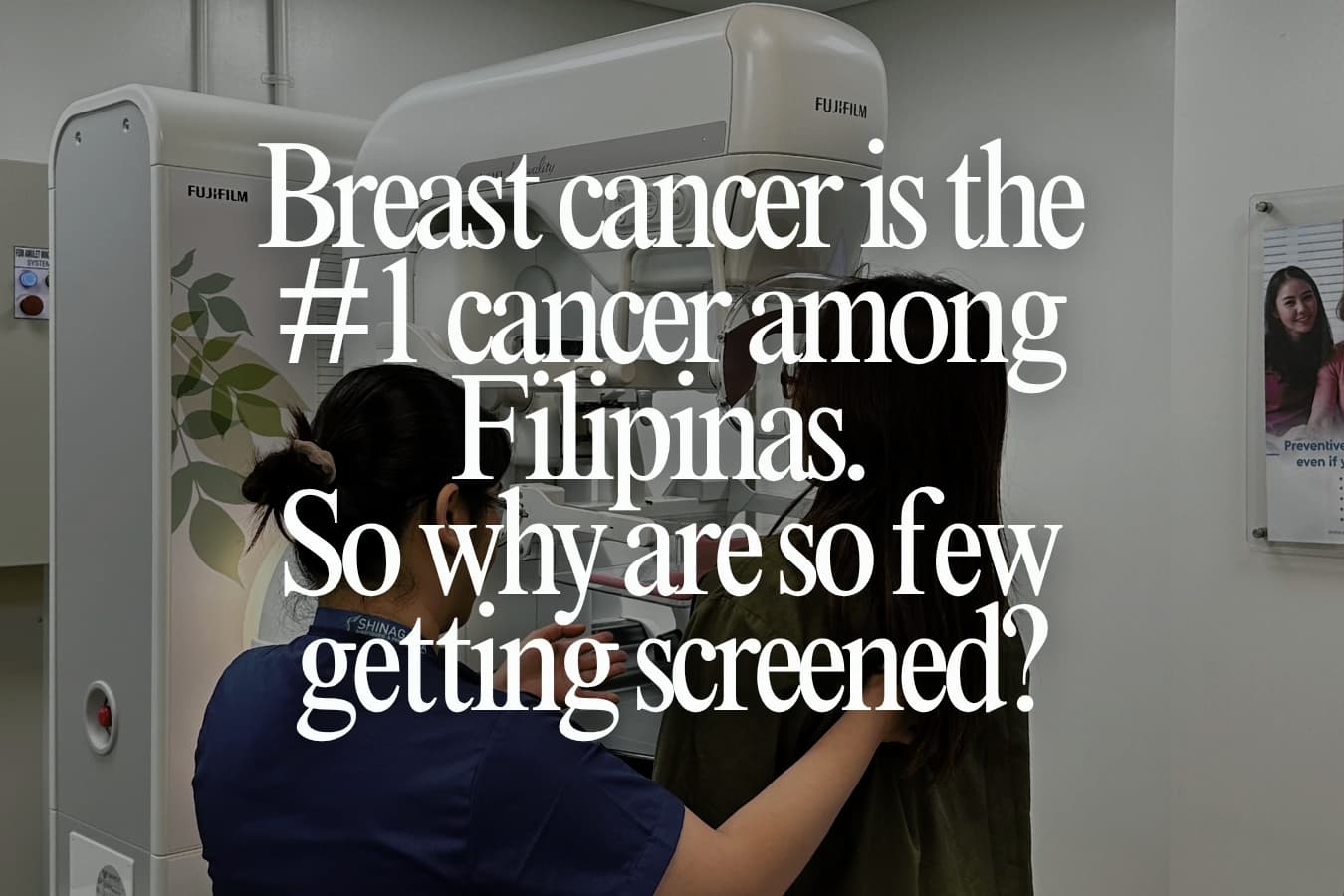
Hati Health Launches Breast Cancer Awareness Month Initiative, Pairing Screening Access with Free OB-GYN Consultations for Filipino Women
October 8, 2026 • 3 MIN READ
MANILA, Philippines — October 2026 — Hati Health, the Philippines' digital health booking platform, today announced a nationwide Breast Cancer Awareness Month initiative for October, offering women's health screening — mammography and the non-invasive Masto-Check blood test — bundled with a free OBGYN consultation to review results with a licensed physician.
The numbers Filipino women need to know
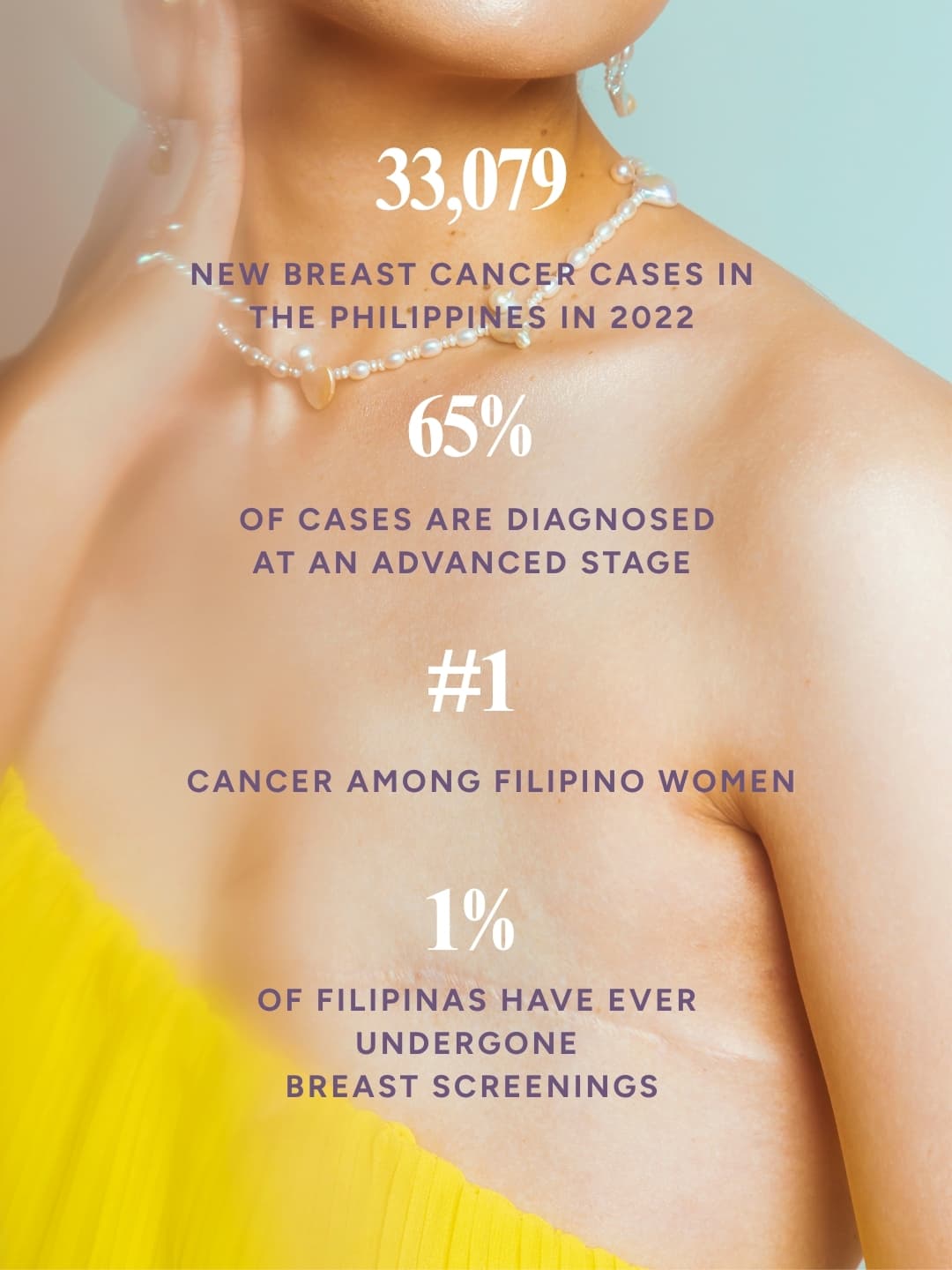
Breast cancer accounted for 33,079 new cases in the Philippines in 2022 — 17.5% of all cancer cases nationwide, more than any other cancer type, in either sex. The Philippines ranks third in breast cancer incidence among Asian countries, and carries the highest mortality rate from the disease in the region — meaning Filipino women are not just getting diagnosed at high rates, they're dying from it at higher rates than their neighbors.
The reason isn't a mystery: about 65% of breast cancer cases in the Philippines are diagnosed only after the disease has reached an advanced stage. By the time symptoms are obvious enough to prompt a hospital visit, the window for the most effective, least invasive treatment has often already closed.
Age matters too. Among Filipino women aged 40–49, incidence sits at 96.28 per 100,000 with a mortality rate of 23.4 per 100,000. Among women aged 50–69, breast cancer becomes the single most common cancer diagnosis, with incidence climbing to 191.4 per 100,000 and mortality to 67.4 per 100,000. And the disease is no longer just a concern for women in their 40s and beyond — a 2025 regional study presented at the Philippine National Cancer Summit found a sharp rise in early-onset breast cancer among women aged 15–39 across Southeast Asia, with the Philippines among the countries recording the highest death rates in this younger age group.
"Access to a screening test alone doesn't close this gap," said Maria Gaitanidou, Co-Founder and CEO of Hati Health. "A woman who gets a mammogram but has no one to explain what the results mean, or what to do next, is still left in the same uncertainty that keeps so many diagnoses arriving too late. That's the specific problem this campaign is built to solve — not just making screening available, but making sure every woman who gets screened also gets a doctor's guidance on what comes after."
What the Screening Guidelines Actually Recommend, by Age
From age 20 — monthly breast self-examination becomes a habit worth building, ideally 7–10 days after your period when breast tissue is least tender
From age 25 — a clinical breast exam by a doctor (checking for lumps, indentation, or changes) as part of your annual physical exam
Age 30–35 — a baseline breast ultrasound, or earlier if you have a family history of breast cancer; ultrasound tends to be more effective than mammography alone for the denser breast tissue common in younger women
Age 40–69 — this is where the strongest, most consistent guidance sits. The Philippine Clinical Practice Guidelines give a strong recommendation for mammography plus a clinical breast exam every two years for women in this age range, and PhilHealth's own screening standards specify that women considered high-risk should get an annual breast ultrasound alongside their mammogram
Any age, regardless of the above — if you notice a breast lump, unusual discharge, or skin changes, DOH guidance is clear: don't wait for your next scheduled screening. See a primary care provider promptly for evaluation and, if needed, referral.
The guidelines exist. The gap is that very few Filipino women are actually following them — of the roughly 54 million women in the Philippines, only about 1% have ever undergone screening, and the Philippine Cancer Society estimates that 32 Filipinas die from breast cancer every day. Guidelines only work if they turn into appointments.
Mammography is the established gold standard — a specialized X-ray that detects lumps, calcifications, and other early structural changes in breast tissue. It's recommended annually for women over 40, and earlier or more frequently for women with a family history of breast cancer.
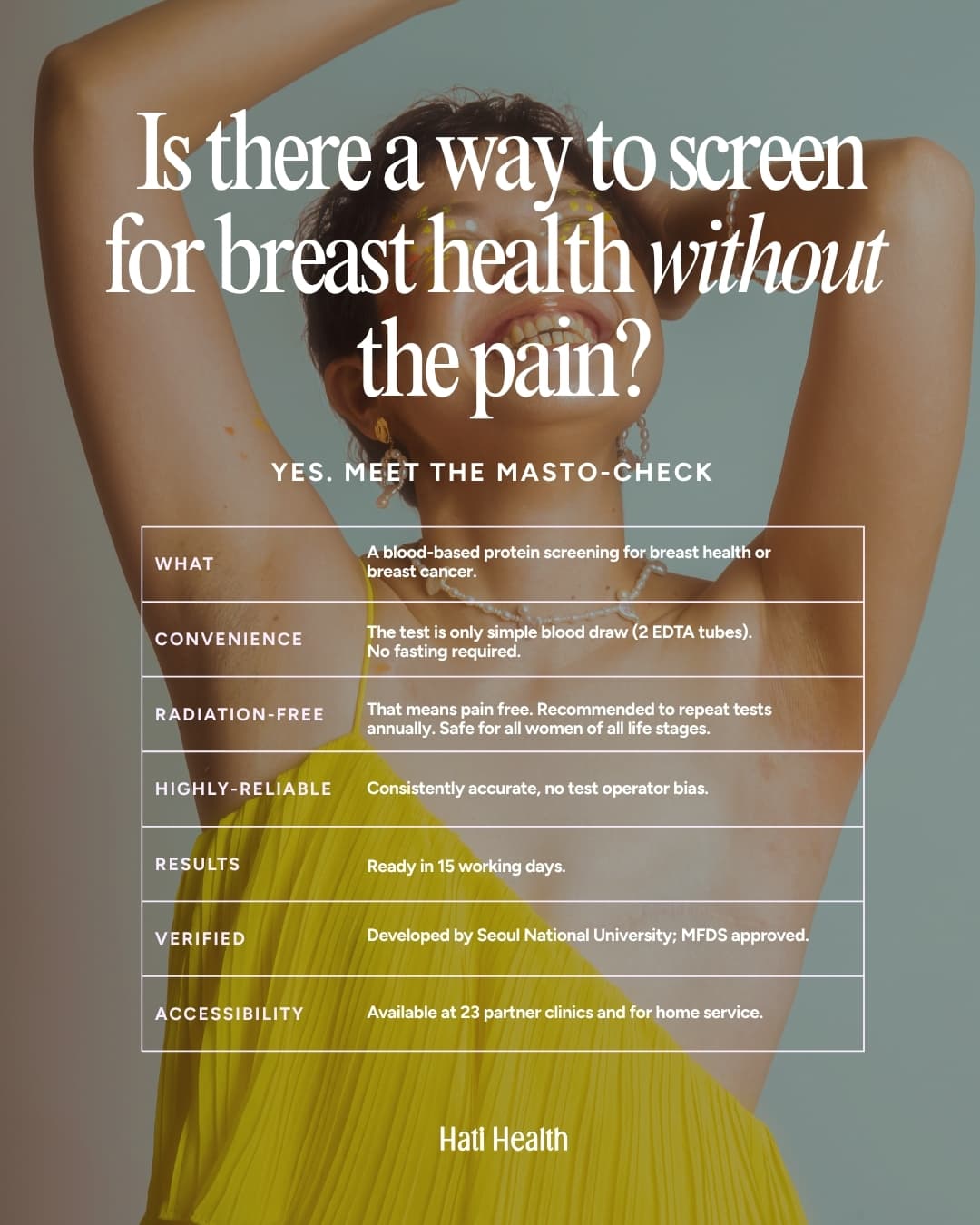
Masto-Check is a newer, non-invasive alternative — a simple blood test that analyzes specific tumor-related proteins rather than imaging the breast directly. It requires no compression, no radiation, and no special preparation, and research shows it performs especially well for women with dense breast tissue, where traditional mammograms can be less accurate. Used alongside mammography, it can meaningfully improve overall detection sensitivity.
Neither test replaces a doctor's judgment — which is exactly why results shouldn't be read alone.
This October: Screening Plus a Free OB-GYN Consultation
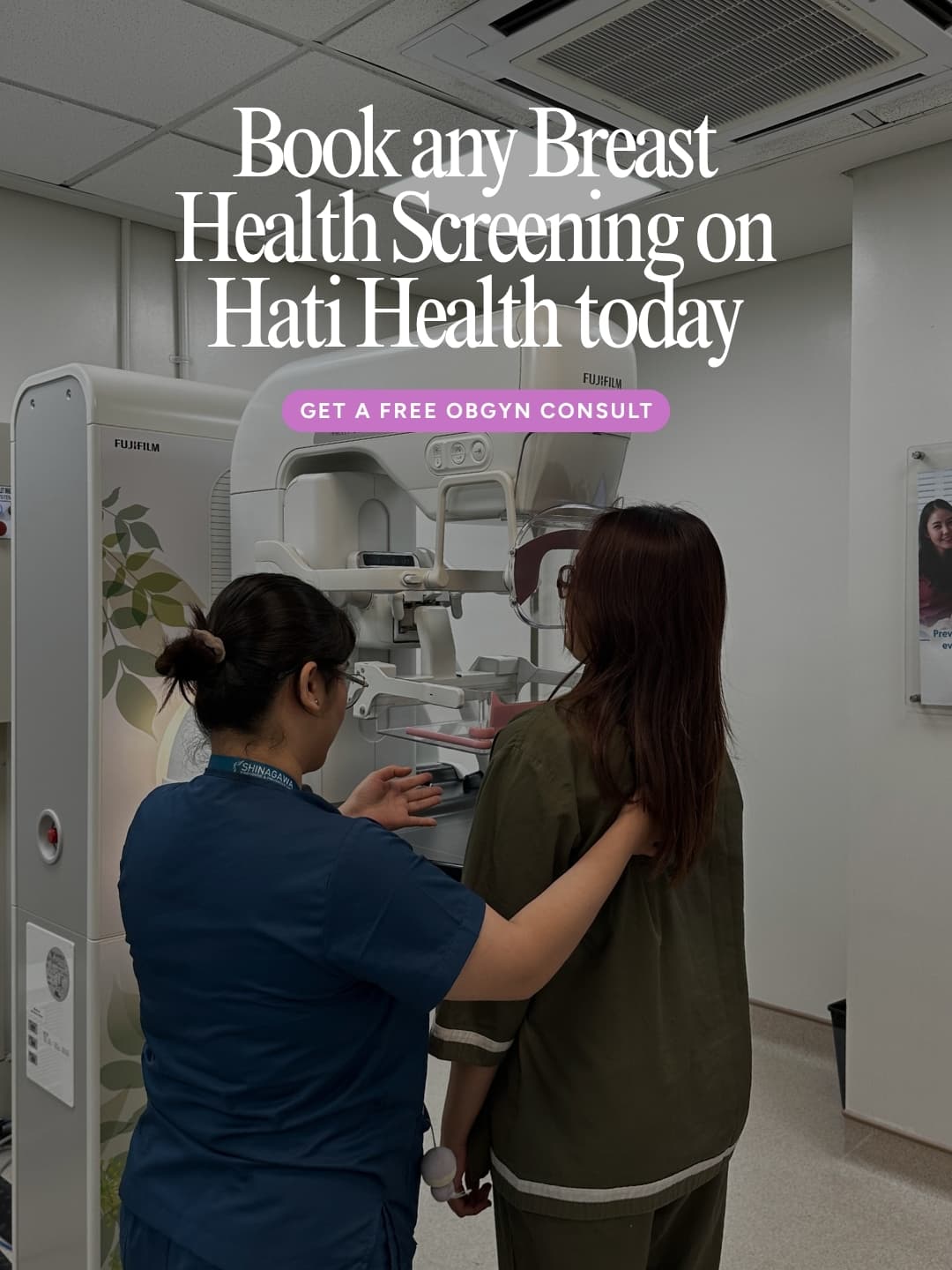
For Breast Cancer Awareness Month, Hati Health is pairing its breast screening services with a free OB-GYN consultation, so every woman who gets screened also gets a licensed doctor to walk through what her results actually mean and what, if anything, to do next.
Mammography — starting at ₱2,500 (down from ₱3,060), available at 20+ partner clinics including Hi-Precision, Healthway QualiMed, Fullerton Health, and Shinagawa Diagnostic & Preventive Care
Masto-Check (Non-invasive Mammogram) — starting at ₱5,310 (down from ₱6,110)
Free OB-GYN consultation — booked alongside either screening, to review your results, answer questions, and guide next steps with an actual doctor rather than leaving you to interpret a lab report alone
This matters because a screening result without context is exactly the kind of gap that lets a "advanced-stage-at-diagnosis" statistic keep repeating. A number on a page doesn't tell a woman what her personal risk factors mean, whether a follow-up test is warranted, or how to act on an abnormal finding — a conversation with an OB-GYN does.
Who Should Book This October
Women 40 and older — due for your annual mammogram, or overdue if it's been more than a year
Women with a family history of breast cancer — regardless of age, worth discussing screening frequency with a doctor
Women with dense breast tissue, or who've had inconclusive mammogram results in the past — Masto-Check may offer a useful second read
How to Book
Booking either screening through Hati Health includes the free medical concierge service — no queues, transparent pricing, and appointment coordination handled for you.
Book Mammography with a free OB-GYN consultation this October on Hati Health.
Book Masto-Check with a free OB-GYN consultation this October on Hati Health.
Frequently Asked Questions
What's the difference between Mammography and Masto-Check? Mammography uses X-ray imaging to detect physical changes in breast tissue and is the established standard, especially for women over 40. Masto-Check is a blood test that detects tumor-related proteins and doesn't involve any imaging, radiation, or breast compression — it's a useful complement, particularly for women with dense breast tissue.
Do I need a mammogram if I have no family history of breast cancer? Yes. Most breast cancer cases occur in women with no known family history. Age remains the biggest risk factor, which is why annual screening from 40 onward is recommended regardless of family history.
What happens during the free OB-GYN consultation? The doctor reviews your screening results with you, discusses what they mean for your specific situation, and advises on any next steps — whether that's routine annual follow-up, additional testing, or referral to a specialist.
Is Masto-Check a replacement for mammography? Not necessarily — the two are typically used as complements to each other rather than substitutes. Your OB-GYN can advise on which combination makes sense for your age, risk factors, and breast tissue density.
If you're experiencing symptoms such as a breast lump, unusual discharge, or skin changes, please don't wait for a scheduled screening — speak with a healthcare provider as soon as possible.
About Hati Health
Hati Health is a digital health platform based in the Philippines, connecting Filipinos to a nationwide network of clinics, laboratories, and healthcare providers for diagnostics, consultations, vaccines, and specialty care — including dedicated women's health, men's health, and sexual health services. Hati Health's mission is to remove the friction — cost, access, and inconvenience — that keeps Filipinos from getting the preventive care they need, when they need it.
Visit www.hati.health

Download the Hati Health App for Android and iOS


